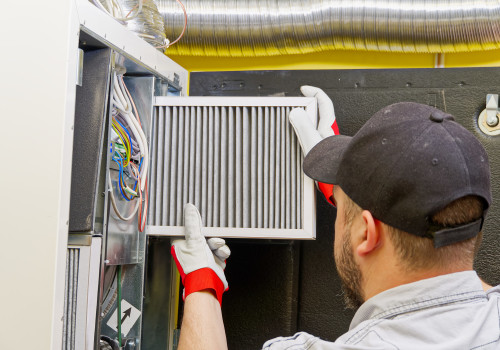
A single air filter protects a system worth thousands of dollars.
That's not a small thing — and in our experience manufacturing filters for homes across Central Florida, it's something most homeowners don't fully appreciate until something breaks.
Here's what we've consistently seen: 4-inch media filters like the 12x26x4 outperform standard 1-inch filters in ways that directly impact equipment longevity. More surface area. Slower loading. Less airflow restriction. A blower motor that isn't straining every cycle.
In Florida, where HVAC systems run nearly year-round and tightly sealed homes recirculate the same air — along with its humidity, mold spores, and seasonal pollen — that performance gap becomes a real cost difference over time.
Neglected or undersized filtration leads to coil buildup, reduced efficiency, and premature system failure. The right 12x26x4 filter is one of the simplest ways to prevent all three.
This page explains exactly how — and what to look for when choosing yours.
TL;DR Quick Answers
12x26x4 Air Filters
A 12x26x4 air filter is a 4-inch deep residential HVAC filter measuring 12 inches high by 26 inches wide. Here's what homeowners need to know:
What it is:
A pleated media filter designed for HVAC systems with a 4-inch filter slot or compatible housing
Available in MERV 8, MERV 11, and MERV 13 ratings for varying levels of filtration
Why the 4-inch depth matters:
Holds significantly more filtration surface than a standard 1-inch filter
Loads more slowly — maintaining steadier airflow and less system strain
Lasts longer between replacements — typically 6 to 12 months
Who it's best for:
Homeowners with HVAC systems configured for 4-inch filter housings
Central Florida homes running HVAC year-round in sealed, humidity-heavy conditions
Households managing seasonal pollen, mold spores, pet dander, or allergy concerns
Recommended MERV rating:
MERV 11 for most homes — best balance of filtration and airflow
MERV 13 for allergy-sensitive households — verify system compatibility first
Bottom line: A properly specified 12x26x4 filter — right MERV rating, correct fit, replaced on schedule — is one of the most effective and lowest-cost tools available for protecting HVAC equipment and maintaining healthy indoor air.
Top Takeaways
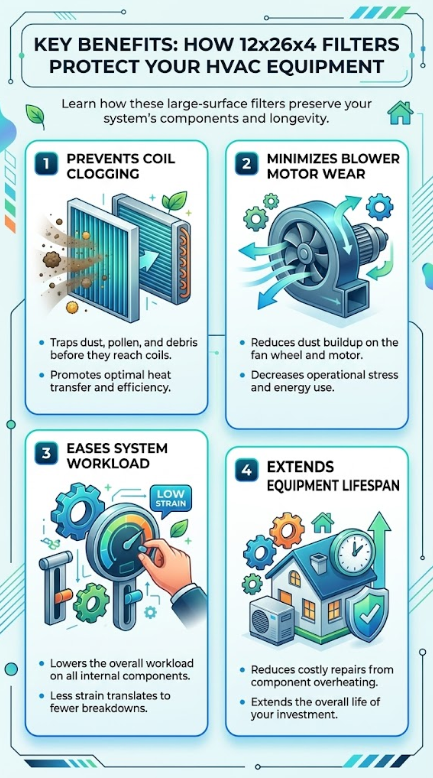
Filter depth matters most. A 4-inch media bed loads slower, maintains steadier airflow, and reduces blower motor strain more effectively than any 1-inch alternative.
Your coil is only as protected as your filter. Particles that bypass a loaded filter settle on coil surfaces — reducing efficiency and driving up energy costs.
MERV 11 is the sweet spot for most Central Florida homes. It captures mold spores, fine dust, and seasonal pollen without restricting airflow. Verify system capacity before stepping up to MERV 13.
A neglected filter is an active liability. A loaded filter restricts airflow, forces longer run cycles, and can raise AC energy consumption by up to 15%. Replace every 6 to 12 months.
Florida's filtration demands are higher than most. Sealed homes, year-round operation, humidity, and heavy seasonal pollen accelerate coil fouling and filter loading. A 4-inch filter isn't an upgrade here — it's the right baseline.
Why Filter Depth Is the Variable That Actually Matters
Most homeowners shop by price. Depth is what they should be evaluating.
A 4-inch media bed holds significantly more filtration surface than a 1-inch filter. More surface area means slower particulate loading, more consistent airflow, and less mechanical strain on the system. In our manufacturing experience, this single specification — depth — has a more direct impact on equipment health than almost any other filter variable.
How a 12x26x4 Filter Protects Your Evaporator Coil
Your evaporator coil is one of the most expensive components in your system — and the most vulnerable to filtration failure.
Fine particles settle on the coil surface and act as insulation. Heat transfer drops. Run times increase. Energy costs rise. A 12x26x4 filter at MERV 11 or MERV 13 intercepts those particles before they reach the coil. In Central Florida's climate — persistent humidity, heavy spring pollen, elevated mold spore counts — coil fouling happens faster than most homeowners expect. Proper filtration is one of the most practical defenses available.
Blower Motor Health Starts with Steady Airflow
Your blower motor is rated for a specific airflow range. Restrict that range and it draws more current, runs hotter, and wears faster.
The 4-inch media depth in a 12x26x4 filter loads slowly enough to keep static pressure stable across most of its service life. The blower operates closer to its designed performance point — less strain, less heat, longer motor life. In our experience, blower motor longevity is one of the most underappreciated arguments for choosing a 4-inch filter over a standard 1-inch.
Choosing the Right MERV Rating for Your Home
Not every MERV rating fits every system. Here's the practical breakdown:
MERV 8 — Captures dust, pollen, and larger particles. Reliable baseline protection.
MERV 11 — Adds mold spores, fine dust, and pet dander. Best fit for most Central Florida households.
MERV 13 — Maximum residential filtration. Verify your system's airflow capacity before selecting — denser media can restrict airflow in older or lower-capacity units.
MERV 11 in a 4-inch filter is consistently where we see the best balance of protection and performance.
Replacement Timing Completes the Protection
Even the best filter becomes a liability when overdue for replacement.
A fully loaded 12x26x4 filter restricts airflow and reduces filtration efficiency. In severe cases, collapsed media can allow debris to bypass the filter entirely and reach components directly.
Every 6–12 months — standard household conditions
Every 3–6 months — homes with pets, allergies, or high dust
Inspect every 90 days — darkened or gray media means it's time
The 4-inch depth gives more capacity than a 1-inch alternative — but staying on schedule is what sustains the protection.
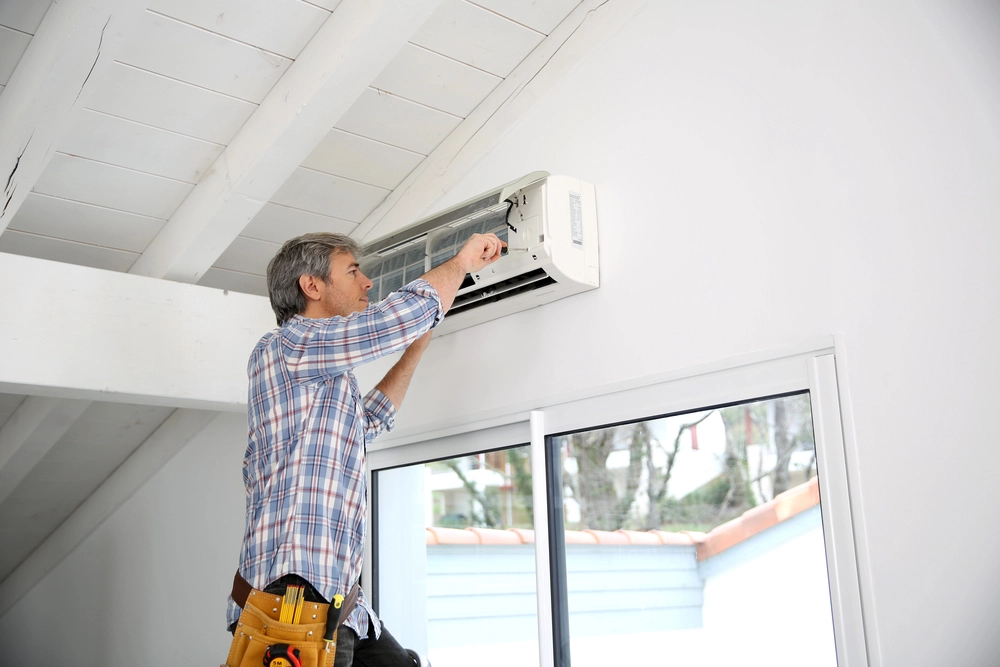
"In our experience manufacturing filters for homes across Central Florida, the homeowners who get the most out of their HVAC systems aren't necessarily the ones spending the most on maintenance — they're the ones who understood early that a properly specified 4-inch filter is doing quiet, continuous work that prevents the failures most people never see coming."
Essential Resources for Choosing and Using 12x26x4 Air Filters
We've spent over a decade manufacturing filters and talking with homeowners about what actually matters in air filtration. The resources below are the same authoritative sources we rely on to back the guidance we give. If you want to go deeper on any of the topics covered on this page — from MERV ratings to replacement timing to equipment protection — these are the right places to start.
1. How HVAC Filters Actually Protect Your Home's Air Quality
Most homeowners don't realize how much a single filter specification affects both the air their family breathes and the lifespan of their HVAC system. The EPA's consumer guide makes that connection clear — covering how furnace and HVAC filters work, what MERV ratings mean in plain language, and what to look for when upgrading filtration in your home.
Source: U.S. Environmental Protection Agency
URL: https://www.epa.gov/indoor-air-quality-iaq/guide-air-cleaners-home
2. What MERV Ratings Are Actually Capturing — And What They're Missing
Understanding MERV ratings isn't just about picking a number — it's about knowing which particles your filter is and isn't stopping. This EPA technical bulletin breaks down minimum MERV requirements for residential systems, particle capture rates at each rating level, and when the upgrade to a higher MERV filter genuinely makes a difference for your home and your equipment.
Source: U.S. Environmental Protection Agency
URL: https://www.epa.gov/sites/default/files/2020-06/documents/2019.11_tech_bulletin_filtration.pdf
3. The Industry Standard Behind Every MERV Number on Every Filter
Every MERV rating on every filter sold in the U.S. — including every 12x26x4 we manufacture — is assigned based on testing methods developed and maintained by ASHRAE. If you've ever wondered how those numbers are determined, what they actually measure, and why filter efficiency can vary even within the same rating, this is the authoritative source for those answers.
Source: American Society of Heating, Refrigerating and Air-Conditioning Engineers
URL: https://www.ashrae.org/technical-resources/filtration-and-disinfection-faq
4. The Direct Link Between Filter Maintenance and What You Pay to Run Your System
A loaded filter doesn't just stop protecting your air — it starts costing you money. ENERGY STAR's guidance connects neglected filter maintenance directly to higher energy bills, increased system strain, and early equipment failure. In our experience, this is one of the most underappreciated arguments for staying on a consistent replacement schedule with a 4-inch filter.
Source: ENERGY STAR
URL: https://www.energystar.gov/saveathome/heating-cooling
5. Why Filter Fit and Installation Are as Important as the Filter Itself
After manufacturing millions of filters, one thing we know is that even the right filter underperforms when it isn't installed correctly. The U.S. Department of Energy explains how improper installation — poor seal, wrong placement, or a filter that's been bent to fit — reduces system efficiency and accelerates motor wear. Essential reading before installing a 12x26x4 filter for the first time.
Source: U.S. Department of Energy
URL: https://bsesc.energy.gov/energy-basics/hvac-proper-installation-filters
6. The Health Case for Taking HVAC Filtration Seriously
Clean air isn't just about comfort — it's about protecting your family's respiratory health every day. CDC and NIOSH guidance on MERV-13 filtration recommendations, proper filter sizing, and the connection between upgraded HVAC filtration and reduced indoor health risks. Particularly important for households with allergy sufferers, young children, or elderly family members.
Source: Centers for Disease Control and Prevention / NIOSH
URL: https://www.cdc.gov/niosh/ventilation/prevention/air-cleanliness.html
7. A Homeowner's Complete Guide to Cooling Efficiency and Filter Upkeep
Filter maintenance is one of the most impactful — and most overlooked — contributors to year-round cooling efficiency. The DOE's residential cooling resource covers replacement timing, system sizing, and energy-saving strategies that matter most in climates like Central Florida's, where HVAC systems run nearly continuously and filtration demands are higher than most.
Source: U.S. Department of Energy
URL: https://www.energy.gov/energysaver/home-cooling-systems
Supporting Statistics
We don't cite statistics to fill space. After manufacturing millions of filters and talking with homeowners across Central Florida, these numbers confirm what we've seen firsthand — and they make the case for proper filtration better than any sales pitch could.
Stat 1 — The Air Inside Your Home Is the Air Your Family Breathes Most
Americans spend approximately 90% of their time indoors — where concentrations of some pollutants are often 2 to 5 times higher than typical outdoor levels.
What this means in practice:
Most families aren't breathing outdoor air — they're recirculating indoor air, continuously
In Central Florida, sealed homes and year-round HVAC operation eliminate most natural air dilution
Mold spores, pollen, pet dander, and dust cycle through your system repeatedly until something stops them
In our experience, this single realization shifts how homeowners approach filtration — it stops being a maintenance task and becomes a protection decision
Source: U.S. Environmental Protection Agency — Indoor Air Quality
URL: https://www.epa.gov/report-environment/indoor-air-quality
Stat 2 — Nearly Half of Every Dollar on Your Energy Bill Is HVAC
Nearly half of all the energy used in the average American home goes to heating and cooling.
What we've consistently seen from homeowners chasing high energy bills:
Thermostats replaced. Windows sealed. Insulation added.
The filter? Often the last thing checked — despite being the most direct variable in daily system efficiency
A loaded or undersized filter forces longer run cycles, higher energy draw, and mechanical strain that quietly compounds over months
A properly fitted 12x26x4 filter that maintains steady airflow isn't just protecting equipment — it's actively defending the largest energy expense in your home
Source: ENERGY STAR — Heat & Cool Efficiently
URL: https://www.energystar.gov/saveathome/heating-cooling
Stat 3 — A Clean Filter Can Cut AC Energy Consumption by Up to 15%
Replacing a dirty, clogged filter with a clean one can lower your air conditioner's energy consumption by 5% to 15%.
What stands out to us isn't the ceiling — it's the floor:
Even at 5%, that's a measurable, recurring cost that compounds every month a loaded filter stays in place
In Florida, where cooling systems run year-round, the financial impact of a neglected filter is higher than in most U.S. climates
A 4-inch media filter loads more slowly than a 1-inch alternative — keeping airflow and performance stable for longer between changes
The filter does more of its job for more of its service life — but only when replaced on schedule
Source: U.S. Department of Energy — Maintaining Your Air Conditioner
URL: https://www.energy.gov/energysaver/maintaining-your-air-conditioner
Final Thoughts
A 12x26x4 air filter is one of the least complicated decisions a homeowner can make — and one of the most consequential ones they consistently delay.
After manufacturing millions of filters and talking with homeowners across Central Florida, our perspective is clear: most HVAC problems don't start with aging equipment or extreme weather. They start with filtration that couldn't keep up.
What the data and our experience point to together:
Indoor air is 2 to 5 times more polluted than outdoor air — and in sealed Florida homes, it recirculates constantly
Nearly half of every home energy dollar goes to heating and cooling — making system efficiency a real financial stake
A clean filter alone can reduce AC energy consumption by up to 15% — a return that compounds every month it stays in place
What the statistics don't show — but we see consistently:
The coil that didn't foul
The blower motor that didn't burn out early
The service call that was never needed
That's the quiet, continuous work a properly specified 12x26x4 filter does when it's the right MERV rating, correctly installed, and replaced on schedule.
Our honest opinion:
Most homeowners are under protecting systems worth thousands of dollars with filters that cost a fraction of a single service call. The 4-inch media depth of a 12x26x4 filter isn't a premium upgrade — it's what adequate protection actually looks like for a Central Florida home running its HVAC nearly year-round.
The filter is never the exciting part of homeownership. But it's one of the few things you can do once every six to twelve months that pays forward in equipment life, energy efficiency, and air quality every single day in between.
FAQ on 12x26x4 Air Filters
Q: What does the 12x26x4 measurement mean on an air filter?
A: The three numbers are the filter's physical dimensions:
12 = height in inches
26 = width in inches
4 = depth in inches
The depth is the specification that matters most. Here's why:
More depth means more filtration surface area
More surface area means slower particulate loading
Slower loading means longer effective performance between replacements
After manufacturing filters across hundreds of size configurations, depth correlates more directly with equipment protection than brand, frame material, or price point — consistently.
Q: What MERV rating should I choose for my 12x26x4 air filter?
A: For most Central Florida homes, MERV 11 is the right choice.
MERV 8 — Basic protection. Undershoots what sealed, humidity-heavy Florida homes actually demand.
MERV 11 — Captures mold spores, fine dust, pet dander, and heavy seasonal pollen. Best balance of filtration and airflow for standard residential systems.
MERV 13 — Maximum residential filtration. Best for allergy-sensitive households. Verify your system's airflow capacity before selecting.
The right MERV rating isn't the highest one available. It's the highest one your system can support without airflow restriction.
Q: How often should I replace my 12x26x4 air filter?
A: Standard replacement intervals:
Every 6–12 months — standard household conditions
Every 3–6 months — homes with pets, allergies, or high dust levels
Every 90 days — inspect visually regardless of schedule
What Central Florida homeowners need to know:
Sealed homes, persistent humidity, and year-round HVAC operation load filters faster than national averages
Darkened or gray media means it's time — regardless of the calendar
The 4-inch depth provides more capacity than a 1-inch filter, but still has a service limit
Staying ahead of that limit is what keeps the protection continuous.
Q: Will a 12x26x4 filter work in any HVAC system?
A: Not automatically. Compatibility depends on one key factor — available filter slot depth.
What to check before ordering:
Measure the available depth in your existing filter slot
Confirm your air handler housing can accommodate a 4-inch filter
Review your HVAC system documentation for filter size specifications
Important caveats:
Many standard systems are configured for 1-inch filters only
Forcing a 4-inch filter into an undersized slot compromises the seal — and defeats the filtration
Some systems can be retrofitted with a wider filter housing at modest cost
When in doubt, a qualified HVAC technician can confirm compatibility in a single visit
Q: Is a 12x26x4 air filter worth the higher upfront cost compared to a 1-inch filter?
A: Yes — and the case is straightforward.
The cost comparison over time:
Longer service life narrows the price gap significantly vs. frequently replaced 1-inch filters
A single HVAC service call in Central Florida typically exceeds the cost of multiple years of 12x26x4 filters
What the 4-inch filter prevents:
Coil fouling and cleaning bills
Early blower motor replacement
Elevated monthly energy costs from a system working harder than it should
The honest bottom line: The question isn't whether a 12x26x4 filter is worth the cost. It's whether the system it's protecting can afford the alternative.
Find the Right 12x26x4 Air Filter to Protect Your HVAC Equipment
A properly specified 12x26x4 filter is one of the simplest, most cost-effective steps you can take to extend the life of your HVAC system — and our selection of MERV 8, MERV 11, and MERV 13 options makes it easy to match the right filter to your home's specific needs. Shop our 12x26x4 air filters today and take the next step toward cleaner air and better-protected equipment.Learn more about HVAC Care from one of our HVAC solutions branches…
Filterbuy HVAC Solutions - Miami FL - Air Conditioning Service
1300 S Miami Ave Apt 4806 Miami FL 33130
(305) 306-5027